Supply chains are more complex than ever, with volatile demand shifts, geopolitical uncertainties, and unpredictable disruptions.
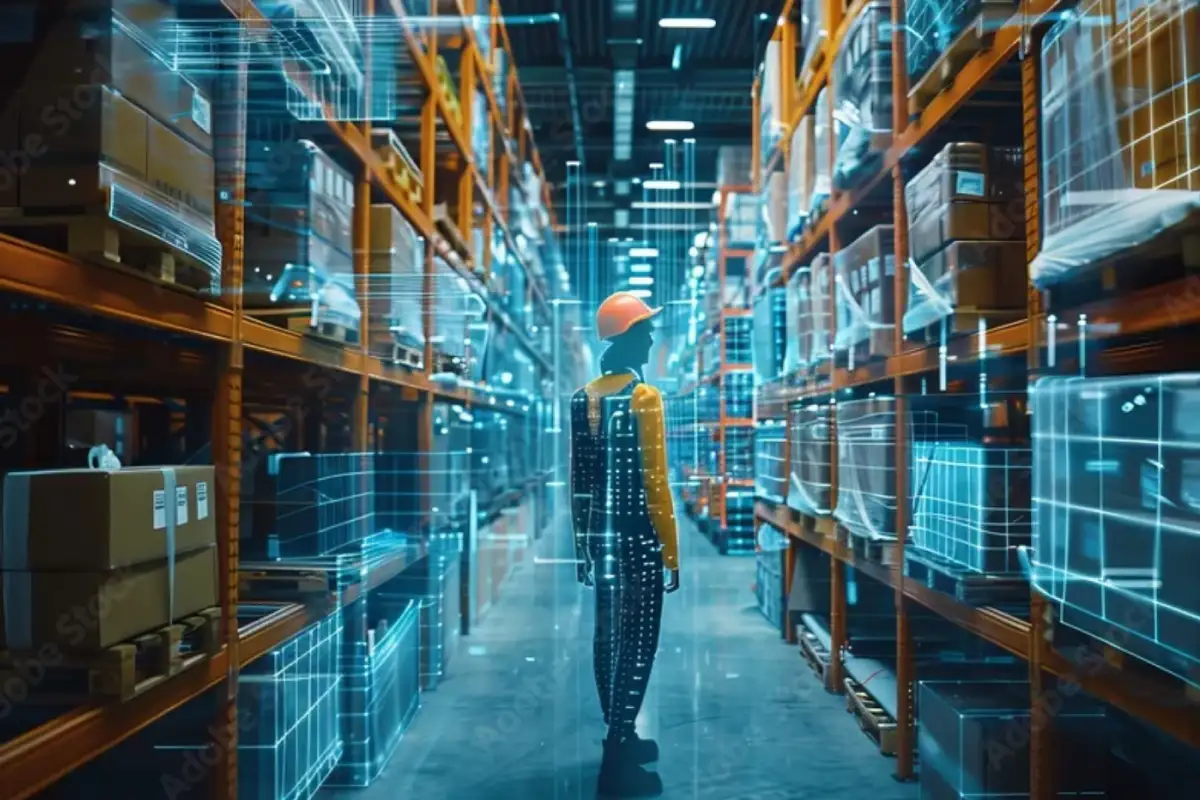
Inventory management has always been a balancing act—carrying too much increases costs while carrying too little leads to stockouts. Traditional approaches relying on statistical forecasting and manual adjustments are increasingly inadequate in today's volatile market. Supply chains must contend with sudden demand shifts, supplier disruptions, and ever-shortening product lifecycles.
AI-Enabled Digital Twins offer a transformative solution, providing real-time visibility and prescriptive insights that allow organizations to continuously optimize inventory levels. By simulating entire supply chain ecosystems, digital twins enable businesses to anticipate disruptions, dynamically adjust safety stocks, and coordinate seamlessly across networks.
Demand Volatility and Forecast Inaccuracy
Traditional demand forecasting relies on historical data and simplistic models that struggle to capture real-world complexity. Seasonal demand shifts, promotional activities, and macroeconomic factors can cause significant forecast errors, leading to excess inventory or critical stockouts.
Supply Chain Disruptions and Lead Time Uncertainty
Modern supply chains span multiple tiers and geographies, increasing exposure to disruptions. Supplier delays, transportation bottlenecks, and geopolitical events can extend lead times unpredictably, making it difficult to maintain optimal safety stock levels.
Inventory Segmentation Complexity
Not all inventory should be managed the same way. High-value, fast-moving items require different strategies than slow-moving or obsolete stock. Without sophisticated segmentation, businesses often apply one-size-fits-all policies that result in suboptimal inventory allocation.
Multi-Echelon Coordination
Coordinating inventory across multiple distribution tiers—from manufacturing plants to regional warehouses to retail locations—requires sophisticated visibility and decision-making capabilities that traditional tools lack.
Real-Time Inventory Visibility and Sensing
Digital twins create a live virtual model of inventory across the entire supply network. By integrating data from IoT sensors, warehouse management systems, and point-of-sale platforms, organizations gain an accurate, real-time picture of stock levels at every location. This visibility eliminates information gaps that lead to over-ordering or stockouts.
Dynamic Safety Stock Optimization
Traditional safety stock calculations use static formulas based on average demand and lead time variability. Digital twins replace this with dynamic models that continuously recalculate safety stock based on real-time demand signals, supplier performance data, and risk assessments. When a supplier shows signs of delivery delays, the digital twin automatically adjusts safety stock targets and triggers replenishment actions.
Intelligent Demand Sensing and Forecasting
AI algorithms within digital twins analyze diverse data streams—including market trends, social media signals, weather patterns, and economic indicators—to generate highly accurate demand forecasts. Machine learning models continuously learn from new data, improving forecast accuracy over time and enabling proactive inventory positioning.
Multi-Echelon Inventory Optimization
Digital twins optimize inventory across all supply chain tiers simultaneously. By modeling the entire network, they identify opportunities to reduce total inventory investment while maintaining service levels. For example, centralizing safety stock at regional distribution centers rather than individual stores can significantly reduce overall inventory while ensuring rapid replenishment.
Scenario Simulation for Risk Management
Digital twins enable supply chain managers to simulate various disruption scenarios—supplier failures, demand spikes, transportation disruptions—and evaluate their impact on inventory levels. This allows organizations to develop contingency plans and pre-position inventory strategically to mitigate risks before they materialize.
Automated Replenishment and Allocation
Integrating digital twin insights with procurement and logistics systems enables automated replenishment triggers and intelligent inventory allocation. When inventory falls below optimized thresholds, the system automatically initiates purchase orders or inventory transfers, reducing manual intervention and response times.
Reduced Carrying Costs: Optimizing inventory levels across the network minimizes capital tied up in excess stock.
Improved Service Levels: Dynamic safety stock management ensures product availability even during demand spikes or supply disruptions.
Enhanced Agility: Real-time visibility and automated responses enable rapid adaptation to changing market conditions.
Better Decision Making: Prescriptive insights and scenario analysis support more informed strategic and operational decisions.
Competitive Advantage: Organizations that master inventory optimization can offer superior service at lower cost, strengthening market position.
Inventory optimization has never been more challenging or more critical. AI-Enabled Digital Twins provide the sophisticated capabilities needed to navigate today's complex supply chain environment—transforming inventory from a cost center into a strategic asset. Organizations that embrace these technologies will be better positioned to satisfy customers, reduce costs, and build resilient supply chains capable of thriving amid uncertainty.
Test your own scenarios with TADA’s Clean TO! Build and see the impact in minutes.
Try TADA Clean TO! Build
Test your own scenarios with TADA’s RM Inventory Manager and see the impact in minutes.
Try RM Inventory Manager

Use TADA’s Tariff Manager to model costs, build agility, and protect margins.
Try the Tariff Manager
Test your own scenarios with TADA’s Tariff Manager and see the impact in minutes.
Try the Tariff Managerest your own scenarios with TADA’s RM Inventory! Manager and see the impact in minutes.
TRY RM Inventory! Manager
Team TADA brings together supply chain practitioners, data engineers, and AI specialists focused on turning complex supply chain data into coordinated action. TADA-an anagram for Data-is built on an AI-enabled Digital Twin foundation that connects data, processes, partners, and decisions to enable real-time visibility, actionable insights, and scenario-based planning across extended supply chain networks.TADA supports mission-critical operations for complex supply chains across manufacturing, CPG, retail, and healthcare. With more than 50 enterprise deployments over the past four years, the team has worked with both Fortune 100 organizations and mid-market companies to modernize how supply chains are planned, monitored, and executed.

.jpeg)
.jpeg)