Managing inventories well is essential for businesses looking to gain a competitive advantage.

Managing inventories well is essential for businesses looking to gain a competitive advantage. Overstocking and stockouts were common in the past when inventory was managed primarily manually and based on intuition. But the landscape has dramatically shifted with the emergence of data analytics in supply chain management. Leveraging big data and analytics transforms inventory management in retail and ecommerce by making forecasting more accurate and operations more efficient. This shift enables more informed decision-making, which helps avoid common inventory pitfalls.
Inventory management data analytics uses real-time data collection, advanced analytical tools, and key performance indicators to transform supply chain operations. This approach involves a cycle of collection, analysis, and interpretation of data to gain insights into inventory levels, demand patterns, and supplier performance, using tools like ERP systems and advanced analytics software. The primary goal is to optimize inventory levels and minimize costs while improving customer service and supply chain efficiency.
Effective inventory management relies on monitoring several critical metrics:
· Inventory Turnover Ratio: Measures how often inventory is replaced, indicating demand and operational efficiency.
· Days of Inventory on Hand: Reveals the amount of time inventory is kept before being sold.
· Order Fulfillment Rate: Assesses the ability to meet customer demand promptly.
· Carrying Cost of Inventory: Encompasses all expenses incurred while holding inventory, including storage, insurance, and opportunity costs.
· Stockout Rate: Tracks the frequency of inventory shortfalls, impacting customer satisfaction and revenue.
· Supplier Lead Time: Evaluates the responsiveness of suppliers and its effect on inventory levels.
· Return Rate: Monitors the frequency of product returns, which can signal quality issues or mismatches with customer expectations.
Big data plays a transformative role in enhancing inventory management. By integrating big data analytics, companies can now make more informed decisions that were impossible with traditional methods. This integration enables:
· Advanced Demand Forecasting: Using historical data, market trends, and predictive analytics to more accurately anticipate future demand, reducing the risk of overstock and stockouts.
· Optimization of Inventory Levels: By analyzing sales data and supply chain information, businesses can determine the optimal stock levels, minimizing carrying costs while ensuring product availability.
· Supplier Performance Analysis: Evaluating supplier performance data helps in improving procurement strategies and managing supplier relationships more effectively.
· Real-Time Inventory Tracking: Technologies like IoT and RFID tags enable real-time monitoring of inventory, enhancing visibility and accuracy of inventory data.
· Identifying Market Trends: Big data tools help in analyzing market data, enabling businesses to proactively adapt inventory strategies to market shifts.
Effective implementation of data analytics in inventory management begins with a thorough assessment of current inventory challenges and leveraging technology for data collection, such as IoT and RFID. Developing a robust data management infrastructure is crucial, alongside integrating advanced analytics tools for processing and analyzing collected data. Adopting predictive analytics can revolutionize demand forecasting, while real-time analytics enhances inventory optimization and reduces waste. Effective supplier collaboration and agile supply chain design are also key, allowing quick adaptation to market changes. Training staff to interpret data analytics results and using cloud-based solutions for scalability are essential. Continuous monitoring and improvement of the analytics process, guided by established KPIs, ensure that inventory management strategies remain effective and aligned with business objectives.
Implementing data analytics for inventory management presents challenges like data quality issues, integration difficulties with existing systems, and skills gaps among staff. It can be costly and raises privacy concerns. To address these, businesses should invest in data cleansing tools, phased integration, and staff training while engaging consultants when needed. Additionally, adopting scalable, cloud-based analytics can manage costs, and strict adherence to data protection laws ensures privacy compliance. Overcoming these hurdles is crucial for leveraging analytics to optimize supply chain performance and maintain a competitive advantage.
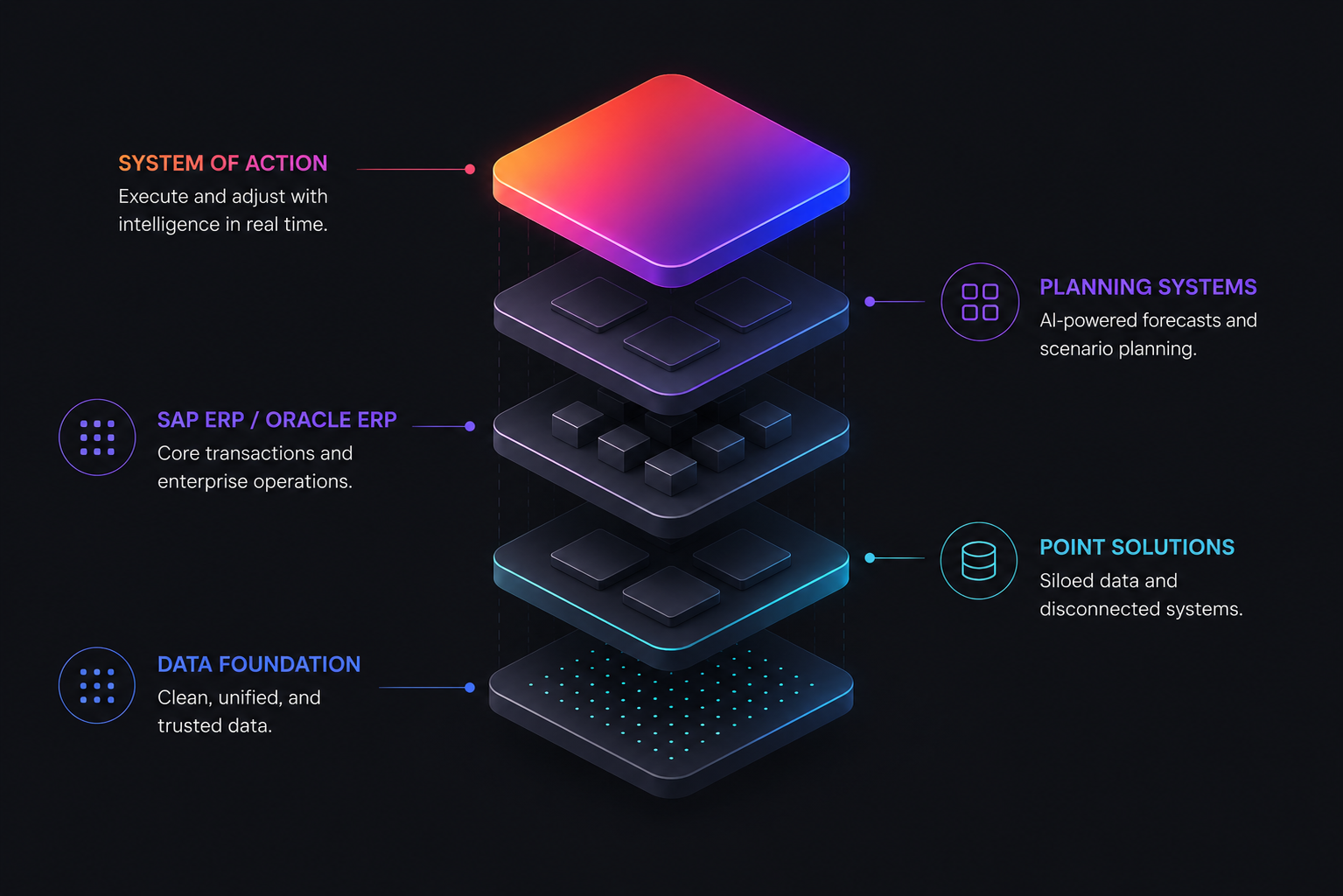
TADA integrates digital twin technology with advanced AI for sophisticated inventory management analytics, moving beyond traditional ERP limitations. By leveraging real-time data, TADA's platform enables precise demand forecasting and advanced analytics, significantly reducing inventory costs and optimizing stock levels. This is particularly effective for items that need demand sensing, using TADA's no-code solutions. Additionally, TADA's collaborative supply chain approach enhances visibility across tiers, allowing for proactive strategies and better supplier performance management. An integrated, data-driven approach to inventory management, supported by TADA's platform, can lead to a more efficient, cost-effective, and customer-focused supply chain.
Ready to transform your inventory management? Contact TADA to learn how our data analytics solutions can optimize your supply chain today.
Test your own scenarios with TADA’s Clean TO! Build and see the impact in minutes.
Try TADA Clean TO! Build
Test your own scenarios with TADA’s RM Inventory Manager and see the impact in minutes.
Try RM Inventory Manager

Use TADA’s Tariff Manager to model costs, build agility, and protect margins.
Try the Tariff Manager
Test your own scenarios with TADA’s Tariff Manager and see the impact in minutes.
Try the Tariff Managerest your own scenarios with TADA’s RM Inventory! Manager and see the impact in minutes.
TRY RM Inventory! Manager
Team TADA brings together supply chain practitioners, data engineers, and AI specialists focused on turning complex supply chain data into coordinated action. TADA-an anagram for Data-is built on an AI-enabled Digital Twin foundation that connects data, processes, partners, and decisions to enable real-time visibility, actionable insights, and scenario-based planning across extended supply chain networks.TADA supports mission-critical operations for complex supply chains across manufacturing, CPG, retail, and healthcare. With more than 50 enterprise deployments over the past four years, the team has worked with both Fortune 100 organizations and mid-market companies to modernize how supply chains are planned, monitored, and executed.