In the modern manufacturing landscape, the misalignment between procurement and production isn’t just a communication problem it’s a performance bottleneck
.jpg)
In the modern manufacturing landscape, the misalignment between procurement and production isn’t just a communication problem it’s a performance bottleneck that directly impacts throughput, margin, and customer satisfaction. As companies push for leaner operations, just-in-time delivery, and dynamic responsiveness, the gap between what’s ordered and what’s actually build-ready has grown more costly to ignore.
Why Procurement and Production Drift Apart
Procurement teams are incentivized to secure materials at the best possible price and terms. Production teams are focused on continuity, cadence, and avoiding line downtime. When these functions operate in silos without shared context or synchronized priorities disconnects arise:
These scenarios create a reactive environment where planners are constantly firefighting instead of orchestrating.
Reimagining Visibility: Beyond Dashboards
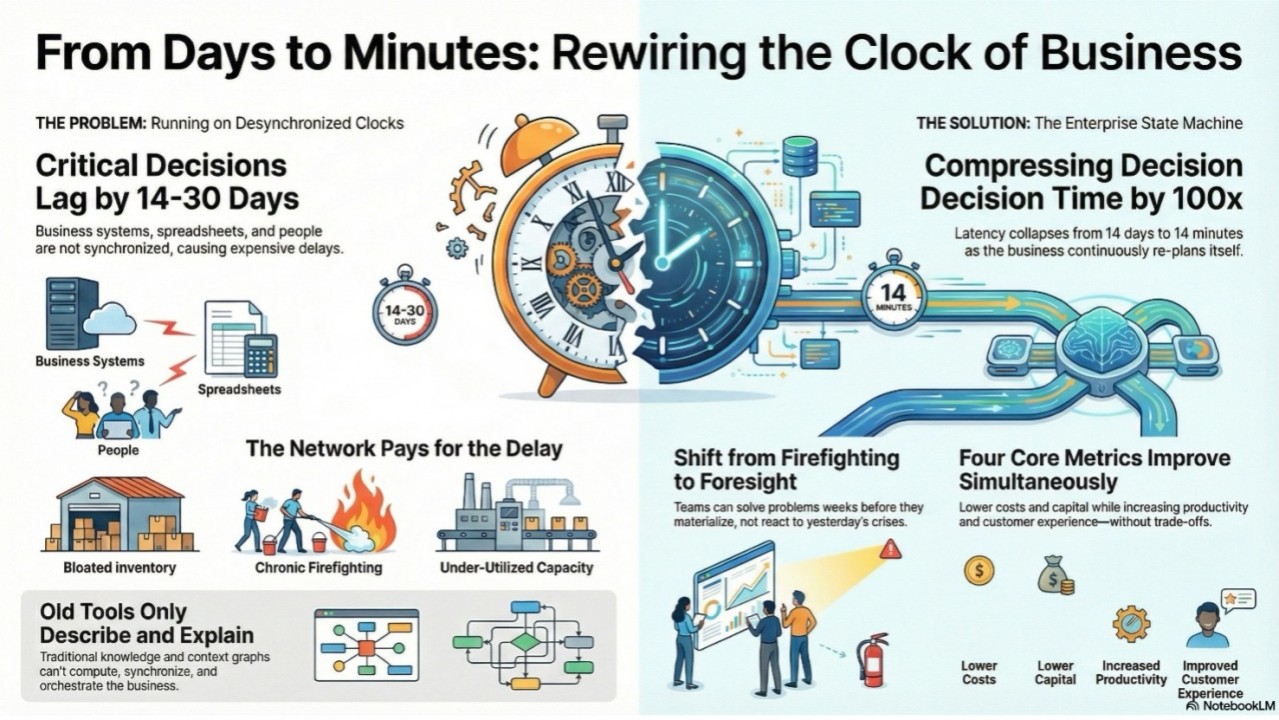
Traditional dashboards only show what’s already happened. To bridge the gap between procurement and production, leaders are shifting to AI-enabled digital twins that synchronize the full supplier ecosystem, capture changes in real time, and trigger proactive alerts before a build bottleneck materializes.
Rather than exporting stale reports, today’s supply chain innovators deploy semantic layers of data that auto-detect:
A Real-World Example: Automotive Tier-1 Supplier
Consider a Tier-1 automotive supplier managing a high-velocity component build. On paper, their inventory was healthy, and orders were confirmed. But one of their Tier-2 suppliers split shipments of a core sensor module delivering the connector harness early, and the actual chip 3 days later.
Because the digital twin flagged the split shipment in real time, procurement was able to escalate with the Tier-2 partner and trigger a secondary backup supplier to fulfill the missing component avoiding a 48-hour production freeze that would have impacted final assembly at the OEM.
This level of responsiveness is only possible with real-time clean-to-build visibility embedded into every procurement decision.
Final Thought: From Functional Efficiency to Ecosystem Excellence
The future of procurement and production is no longer linear, it is networked. Success depends on removing blind spots, automating proactive alerts, and aligning teams around a single ecosystem view.
Leading manufacturers are enabling multi-enterprise orchestration, where every supplier, every planner, and every factory floor operates from a shared truth.
Test your own scenarios with TADA’s Clean TO! Build and see the impact in minutes.
Try TADA Clean TO! Build
Test your own scenarios with TADA’s RM Inventory Manager and see the impact in minutes.
Try RM Inventory Manager

Use TADA’s Tariff Manager to model costs, build agility, and protect margins.
Try the Tariff Manager
Test your own scenarios with TADA’s Tariff Manager and see the impact in minutes.
Try the Tariff Managerest your own scenarios with TADA’s RM Inventory! Manager and see the impact in minutes.
TRY RM Inventory! Manager
Team TADA brings together supply chain practitioners, data engineers, and AI specialists focused on turning complex supply chain data into coordinated action. TADA-an anagram for Data-is built on an AI-enabled Digital Twin foundation that connects data, processes, partners, and decisions to enable real-time visibility, actionable insights, and scenario-based planning across extended supply chain networks.TADA supports mission-critical operations for complex supply chains across manufacturing, CPG, retail, and healthcare. With more than 50 enterprise deployments over the past four years, the team has worked with both Fortune 100 organizations and mid-market companies to modernize how supply chains are planned, monitored, and executed.

.jpg)
.jpg)